Haaretz: "Denied his first victory in Istanbul’s mayoral elections on dubious grounds, Imamoglu has now won by a far larger margin of victory. He’s humbled Erdogan big time – and offered new hope for Turkey’s embattled democrats."
ISTANBUL - “You protected the reputation of Turkish democracy in front of the whole world. You protected our tradition of democracy, one that has existed for more than a hundred years.” Ekrem Imamoglu addressing Istanbul voters in his victory speech on 23 June 2019
The verdict is in: anti-Erdogan candidate Ekrem Imamoglu has won again – and this time round, he’s done it big time.
His opponent, the AKP’s Binali Yildirim conceded defeat just two hours after polling stations closed. With 99.2% of the vote in, Imamoglu has a nine-point lead over Yildirim – a margin of victory of 800,000 votes.
His first victory in Istanbul’s mayoral election on March 31 was extremely narrow: he won by only 18,000 votes - and less than two weeks after taking office, his election was cancelled on dubious technical grounds.

This massive victory for the CHP’s Imamoglu, who’s now beaten the candidate of Turkey’s President Recep Tayyip Erodgan for the second time, is a humiliating blow to Erdogan and his AKP ruling party.
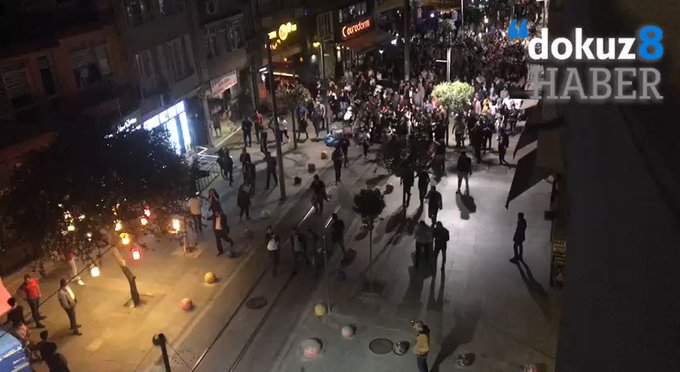
As news came in of the massive victory, residents of Istanbul took to the streets celebrating, with people cheering from their balconies. The quick defeat of Imamoglu’s competitor even took them by surprise.
The noise and excitement was a celebration of the result - but even more so, a collective sigh of relief that the democratic process had been allowed to take its course despite months of attempts by the state to undermine Imamoglu, who had already won these exact elections fair and square, was legitimized by popular mandate, and had even taken up office - only for Turkey’s ruling party to refuse to concede defeat.
However, if the calculation was that the much older Binali Yildirim - a party functionaire and an Erdogan yes man - could transform his last defeat into a victory, they made a colossal mistake.

Imamoglu’s message of hope, and his ability to capture the hearts of minds of not just of loyal CHP secular voters, but also the votes of his right-wing alliance IYI party, a growing number of disaffected AKP voters, and not least voters for the mostly Kurdish HDP, stood firm in the face of the AKP’s campaign of slurs against him.
That broad coalition, no matter how temporary, let to some strange, even perplexing sights, where staunch secularists shouting, “We are all soldiers of Mustafa Kemal Ataturk,” founder of the secular Turkish Republic, next to conservative women covered by headscarves, joined together with Kurds waving the HDP flag.
What was at stake here was much more than a rerun election. It was a referendum on Erdogan’s performance and governance, and the voters’ message is clear: the majority of Istanbul, a metropolis of over 15 million people, with its residents representing every corner of the country’s very diverse population, have become tired of a state that increasingly out of touch with its population and its needs.
While the ailing economy is certainly a major factor in their disappointment, it also emerges from a growing frustration that government appointments are no longer based on merit, but merely on one’s allegiance to the nation’s president. In addition to this, one cannot underestimate the anger among the electorate that Imamoglu’s first win was cancelled. This, for many regardless of party, was a blatant blow to Turkey’s democracy.
Imamoglu’s first election victory should have been accepted – even if not graciously - by the AKP as a sign of the growing dismay in Turkey, but Erdogan’s party’s actual behavior indicates their lack of political nous and strategy. They also misread that Imamoglu’s special message of hope and his promise to end cronyism within the billion-dollar budgeted municipality, which also appealed to conservative sectors within the society.

Imamoglu understood clearly that in order to cash in on the population’s disillusionment with Erdogan, he needed to take a bold strategic step: to break out of the CHP’s base and to extend his reach to those voters - until now - sympathetic to the AKP.
In place of mass rallies held in CHP strongholds he went neighborhood by neighborhood on his bus, setting up afternoon and evening rallies every single day. At these rallies, there were a diverse span of demographic groups, many of whom were not natural CHP voters at all, but who had made the crucial pragmatic decision to maximize the opposition vote by unifying around Imamoglu.
Even marriages of convenience can produce happy endings.
Certainly, today’s victory is a watershed moment in Turkish history. But despite the jaunty optimism of Imamoglu’s campaign slogan, “Everything will be just fine,” even his most die-hard supporters know there’s a long road ahead.
This is one small step in a much longer path over the future of a country that is facing serious economic woes, and a general breakdown of the rule of law. A country that has elected and entitled its president with superpowers that remain without the limitations of checks-and-balances.

Imamoglu’s win now places him as a viable opponent to Erdogan who already has threatened that he would be ineligible to serve as mayor, citing an allegation that he had defamed a state governor by calling him a “dog,” a claim consistently denied by Imamoglu. But in the very recent past, Erdogan has used his presidential powers to replace substantial number of popularly and legally elected mayors with his own handpicked officials.
But for now, Ekrem Imamoglu deserves his share of the limelight and popular acclamation. He has done what many deemed impossible. Like Erdogan who started his career as Istanbul’s mayor in 1994, Imamoglu too could find it in the future to be the ideal platform for contending with Erdogan to lead Turkey.
No less critical an achievement for the anti-Erdogan opposition is the unprecedented cooperation forged between disparate political groups, a coalition which survived dirty tricks and state-led manipulations. That lesson of cooperation, pragmatism and allyship is essential for Turkey to realize the people’s call for hope and change.